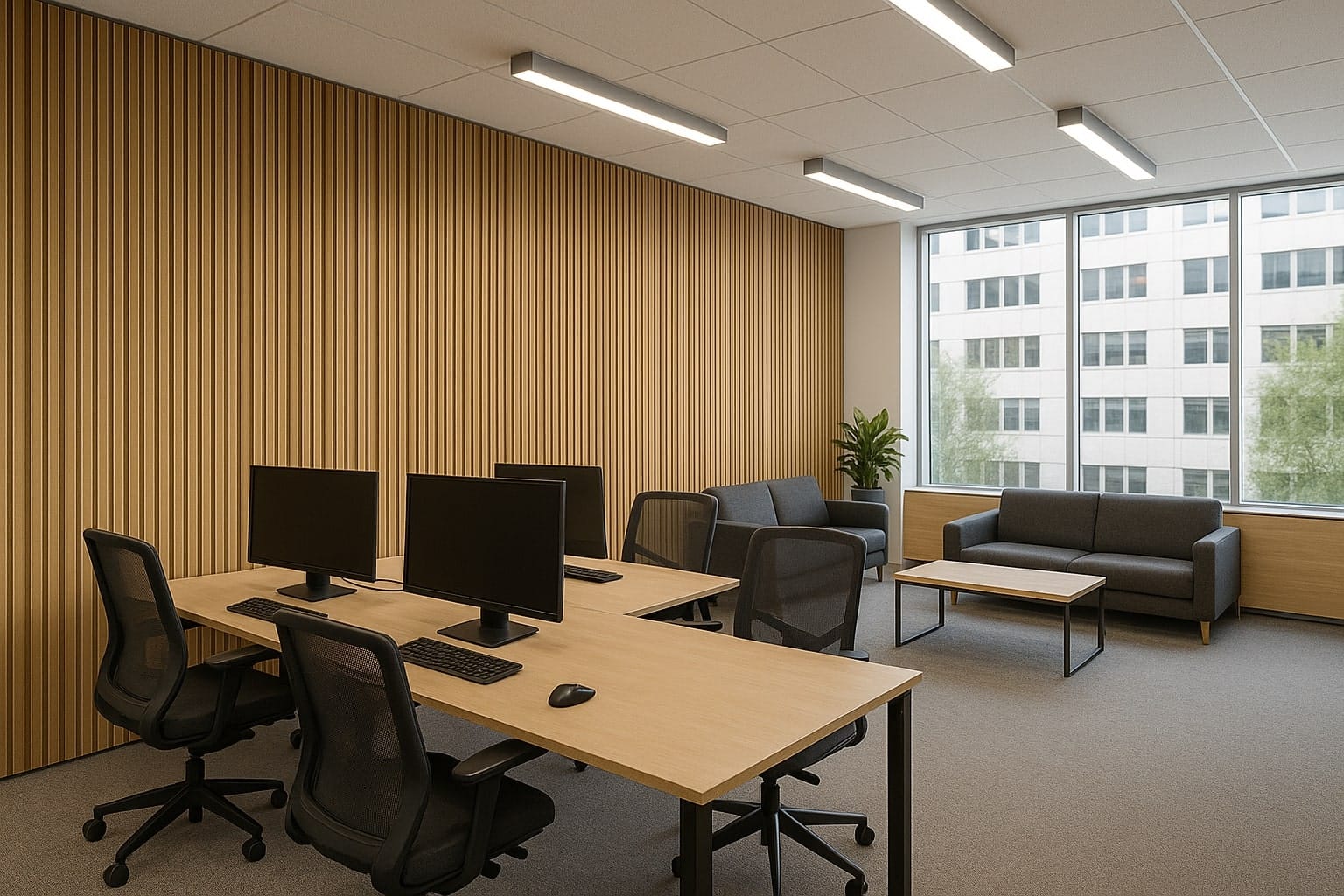
Timber Facades and Fire Safety
Wood slats have re-emerged as a defining material in contemporary facade design, valued for their warmth, modularity, and environmental performance. However, their use in external cladding systems requires rigorous fire-resistant strategies to comply with evolving building regulations. Fire-rated wood slats for facade cladding combine aesthetic expression with tested reaction-to-fire classifications, enabling architects to balance sustainability, safety, and innovation in modern architecture and construction projects.

Fire Performance in External Timber Systems
Fire behaviour in facade assemblies depends on material composition, treatment methods, and installation detailing.
Reaction to Fire Standards
European classification EN 13501-1 defines reaction-to-fire performance for construction products, including facade cladding systems². Timber elements are evaluated based on flame spread, smoke production, and flaming droplets. Achieving B-s1,d0 or comparable classifications often requires fire-retardant treatments or engineered lamination systems.
For facade wood slats, consistent density and surface treatment distribution are critical. Certification testing ensures performance reliability in public buildings such as schools, offices, and event venues.
Fire Retardant Treatments
Pressure impregnation and surface-applied fire-retardant coatings modify timber combustion characteristics. According to the SFPE Handbook of Fire Protection Engineering³, fire-retardant-treated wood reduces heat release rate and delays ignition under specific exposure conditions.
These treatments must be durable under exterior weathering. Moisture resistance and UV stability influence long-term performance, especially in hybrid facade assemblies exposed to climatic variation.
Cavity Barriers and System Design
Facade cladding systems require integrated cavity barriers and substructure detailing to prevent vertical fire spread. Research by the National Fire Protection Association emphasises that fire performance depends not only on surface classification but also on system configuration⁴.
Proper installation, spacing, and ventilation design ensure that wood slats contribute to safe facade construction rather than becoming a pathway for flame propagation.

Sustainability and Material Responsibility
Fire-rated wood slats can align with sustainability and green building objectives when responsibly sourced and documented. FSC Chain of Custody certification ensures traceable timber origin, reinforcing environmental accountability in facade projects⁵.
Environmental Product Declarations (EPDs) quantify embodied carbon and lifecycle impacts, supporting material transparency in sustainable construction¹. When compared with aluminium or composite cladding, responsibly managed timber can offer lower embodied emissions while maintaining fire-resistant compliance.
Moreover, treated wood slats may contribute to thermal insulation strategies by acting as shading devices. External slatted facades reduce solar gain and improve energy performance, aligning with environmental design goals. Sustainable facade design therefore integrates fire safety with energy efficiency and lifecycle responsibility.

Compliance and Engineering Considerations
Facade fire performance demands coordinated engineering evaluation across material treatment, testing, and installation documentation.
Euroclass Certification
Euroclass certification under EN 13501-1 requires laboratory testing under standardised exposure scenarios². Fire-rated wood slats must demonstrate controlled flame spread and limited smoke emission. Verified test reports provide confidence for architects specifying facade cladding in regulated environments.
Building Code Integration
National building codes increasingly reference international fire standards and facade system requirements. The International Building Code recognises fire-retardant-treated wood as a compliant material under defined conditions⁶. Compliance depends on documentation of treatment processes and validated performance data.
Weathering Durability
Exterior exposure influences long-term fire-retardant effectiveness. Studies highlight that leaching and UV degradation may reduce treatment efficacy over time³. Protective coatings and maintenance protocols are therefore essential in ensuring facade reliability throughout service life.
Hybrid Assemblies
Hybrid facade systems combine fire-rated wood slats with non-combustible substrates such as mineral wool insulation or steel framing. This layered configuration enhances overall fire resistance and structural stability. Proper detailing maintains ventilation while preventing flame spread within cavities.
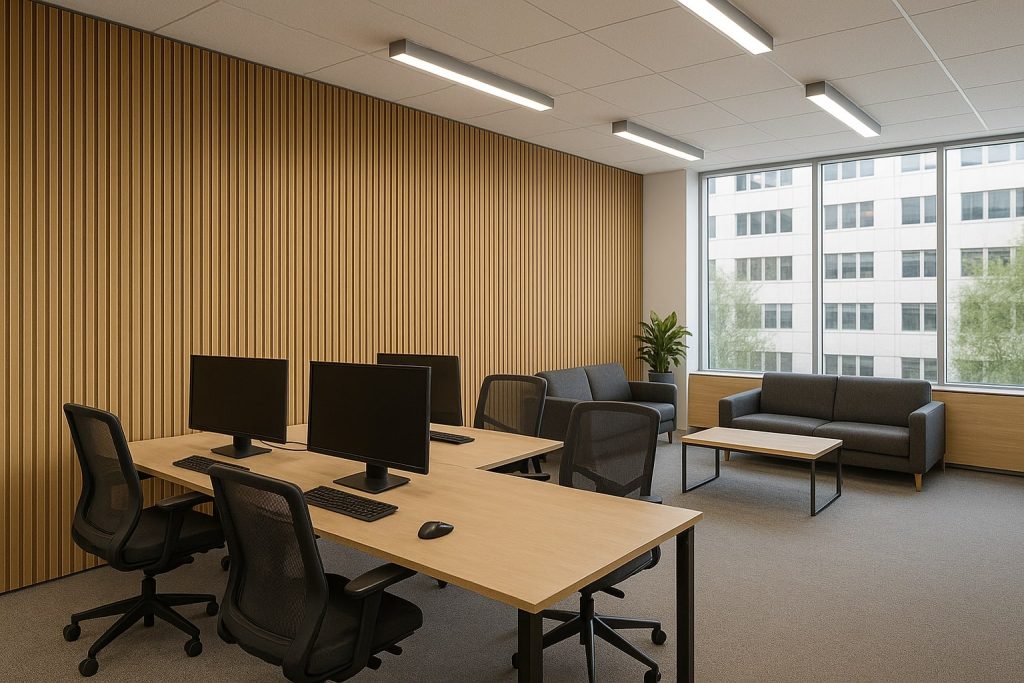
Resilient Timber Architecture
The integration of fire-rated wood slats into facade cladding represents a mature evolution of timber architecture. Through compliance with EN 13501-1 and international building codes, treated wood systems can achieve reliable fire-resistant performance while maintaining the environmental advantages of renewable materials.
Responsible sourcing through FSC certification, transparent lifecycle documentation via EPDs, and hybrid assembly strategies collectively demonstrate that safety and sustainability are not mutually exclusive. When engineered with cavity barriers, durable treatments, and validated testing protocols, timber facades offer both resilience and aesthetic flexibility.
As cities pursue greener construction strategies, facade materials must satisfy increasingly stringent safety benchmarks alongside environmental goals. Fire-rated wood slats provide a balanced pathway—supporting architectural innovation, occupant safety, and eco-friendly design within modern construction practice. By aligning engineering research, certification frameworks, and material science advancements, facade cladding systems can deliver long-term performance without sacrificing sustainability.
References
- United Nations Environment Programme. (2022). 2022 Global Status Report for Buildings and Construction. United Nations Environment Programme.
- European Committee for Standardization. (2018). EN 13501-1: Fire Classification of Construction Products and Building Elements. European Committee for Standardization.
- Hurley, M. J. (Ed.). (2016). SFPE Handbook of Fire Protection Engineering. Society of Fire Protection Engineers.
- National Fire Protection Association. (2021). Fire Spread in Exterior Wall Assemblies. National Fire Protection Association.
- Forest Stewardship Council. (2020). FSC-STD-40-004 V3-1 Chain of Custody Certification. Forest Stewardship Council.
- International Code Council. (2021). International Building Code Chapter 23 Wood. International Code Council.
Share